Showing posts with label Customary Land. Show all posts

Thursday, February 21, 2019

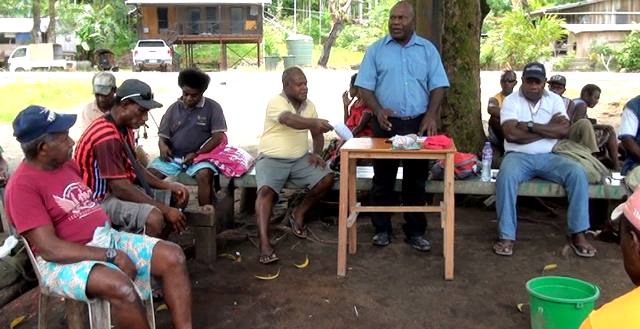
Indigenous landowners can benefit from carbon project in Papua New Guinea

By BEATRICE BONAKOYA | THE NATIONAL (edited)

Customary Landowners (CLOs) in Papua New Guinea (PNG) have to be considered in efforts by the Government and the United Nations to reduce gas emissions in the country, an official said.

Dr Justin Ondopa, a senior researcher with the National Research Institute (NRI) urged the Climate Change and Development Authority (CCDA) and the UN-REDD+ programme to include landowners as much as possible for the sustainability of the project.

“Resources are on the land and land is owned by the indigenous people. When we define carbon right, where does the carbon stay?” he asked.

He was speaking during the question-and-answer session at a one-day workshop that concentrated on information-sharing between stakeholders.

He challenged the participants to create more awareness in the communities. He said carbon right was an issue that very few people had knowledge of and more awareness was needed at the village level.

“When we talk about carbon emission, carbon is found in trees and trees are on the land owned by the people. We need to involve landowners as much as possible,” he said.

Trees help regulate carbon dioxide in the atmosphere as they help store carbon. When trees are cleared, the carbon stored is then released thereby increasing the level of greenhouse gases.

Policy analyst with the CCDA Danny Nekitel said: “It is important that landowner communities should not only be made aware of the benefits of the project, but also of any social, economic, political and environmental consequences that may result due to the establishment of the project … in their river, on their land and the community which they live in.” – via Garamut News.


Saturday, February 9, 2019

Indigenous landowners can benefit from carbon project in Papua New Guinea

By BEATRICE BONAKOYA | THE NATIONAL (edited)

Customary Landowners (CLOs) in Papua New Guinea (PNG) have to be considered in efforts by the Government and the United Nations to reduce gas emissions in the country, an official said.

Dr Justin Ondopa, a senior researcher with the National Research Institute (NRI) urged the Climate Change and Development Authority (CCDA) and the UN-REDD+ programme to include landowners as much as possible for the sustainability of the project.

“Resources are on the land and land is owned by the indigenous people. When we define carbon right, where does the carbon stay?” he asked.

He was speaking during the question-and-answer session at a one-day workshop that concentrated on information-sharing between stakeholders.

He challenged the participants to create more awareness in the communities. He said carbon right was an issue that very few people had knowledge of and more awareness was needed at the village level.

“When we talk about carbon emission, carbon is found in trees and trees are on the land owned by the people. We need to involve landowners as much as possible,” he said.

Trees help regulate carbon dioxide in the atmosphere as they help store carbon. When trees are cleared, the carbon stored is then released thereby increasing the level of greenhouse gases.

Policy analyst with the CCDA Danny Nekitel said: “It is important that landowner communities should not only be made aware of the benefits of the project, but also of any social, economic, political and environmental consequences that may result due to the establishment of the project … in their river, on their land and the community which they live in.” – via Garamut News. 


Thursday, February 7, 2019

Asians caught in Oro for illegal logging under the pretext of doing agricultural business: Illegal logging site closed, culprits jailed

By NELLIE SETEPANO | POST COURIER (edited)

AN illegal logging company operating in Northern Province was shut down and 13 Asians without work permits were locked up at the Popondetta cells.

Northern Province Police have confirmed the shutdown of the illegal logging company known as Northern Forest Products at Collingwood Bay, Wanigela with thousands of logs and heavy equipment impounded. All logs and equipment will be moved to Oro Bay.

Provincial Police Commander Chief Inspector Lincoln Gerari said police had acted on advice from PNG Forest Authority (PNGFA) to move onto the site and shut it down after its illegal operations on 45,000 hectares state land that consists of portions 135, 136 and 137.

“We moved in last Friday and caught them off guard, the Asians were cooking pumpkins, and then fled into the bushes and our men went after them,” Gerari said.

When caught, the men complained that they were never fed properly and or paid by the site manager since arriving last September.

Police said the loggers arrived with no legal entry permits and are now arrested and charged under the Employment of Non-Citizens acts 2007.

Aged between 28 to 50 years; 12 of the men are from Malaysia and one from Indonesia. This section provides for prohibition of employment without valid work permit. Separately, the site manager was charged for stealing logs on state.

According to police, the provincial government had a keen eye on the operations of the company that had entered into a partnership with landowner group called Aiso [Assor] Development Corporation under the pretext of doing agricultural business and growing cash crops like cocoa.

Northern Governor Garry Juffa who has been aware of the illegal operations and had brought the issue to the attention of PNG Forest Authority and ensured the shutdown happened.

He also visited the site after the raid and confirmed the shutdown. Mr Juffa talked to the villages and assured those involved will be prosecuted. The governor has been vocal about illegal aliens operating in the province and vowed to remove them. – Via Garamut News.


REDD+ program in PNG – Forest, Carbon Ownership and Benefit Sharing

By NALAU BINGEDING | NATIONAL RESEARCH INSTITUTE (edited)

Papua New Guinea’s (PNG) greenhouse gas (GHG) emissions are mostly from land use, land use change and forestry (LULUCF). PNG’s CO2 emissions from LULUCF in 2007 were 146.5 – 268.6 million tCO2.

PNG is a signatory to the Kyoto Protocol. Therefore, it is a requirement under this international treaty to reduce our GHG emissions. This is to ensure we assist in the international effort to mitigate the adverse effects of climate change.

Many people in the developed world speculate that reducing emissions from deforestation and degradation of forests in developing countries will be cheap and easy.

In the case of PNG, it will not be cheap and easy to reduce emissions from deforestation and degradation of forests.

The implementation of REDD+ on customary land will be a daunting task for the government because natural forests and land belongs to the customary landowners (CLOs), and not the Government.

As such the PNG Government will have to find better ways to implement the REDD+ concept so that REDD+ is efficiently implemented in PNG.

In so doing, the CLOs will be happy, the Government will be happy, carbon brokers will be happy, and REDD+ projects will not be jeopardized in future due to legal, social and environmental implications.

Moreover, PNG will fulfill its international obligation to reduce its GHG emissions from LULUCF. And this will portray a good image of PNG on the international arena.

More than 97% of the land in PNG is customarily owned. Therefore, control of deforestation and degradation of forests will not be an easy task.

Some control of deforestation and degradation of forests can be attained within timber concessions (TRPs and FMAs) with SFM practices, but that is temporary (only for 35 or 50 years). After a concession has expired and land has been returned to CLOs, control of deforestation and degradation of forests cannot be guaranteed.

Currently some 14 million hectares is considered as production forests and may be some 4 – 5 million hectares is currently under PNGFA, out of the 29 million hectares of forest we have in PNG.

Nevertheless, our Climate Change Ambassador Kevin Conrad and his sidekicks have now committed the country to a national REDD+ program on the international level. Therefore we will have to deal with 29 million hectares of forest now (6 -7 times the current forest area under PNGFA), which will involve more work and problems.

If some of the 29 million hectares of forested land is to be used for REDD+ program, there is likely to be conflict of interest among CLOs and competition between developmental sectors for forested land for development.

Conflict of Interest between city resident CLOs who may want a logging or agroforestry project, while village based CLOs may want a conservation or carbon trade project. A good example is the issuance of the SPABL over a large area of forest in the Collingwood Bay Area (Oro Province).

Competition between development sectors – One sector may want a piece of a forested land for its development, but another sector may also be interested in the same piece of land for its development. For example, a company may want to develop a forested land for oil palm, but the Department of Environment and Conversation may want that land for conservation. So there will definitely be competition for forested lands for development.

So how do we eliminate conflict of interest among CLOs and competition between developmental sectors for forested lands for development?

A National Land Use Plan (NLUP) is an option that has to be looked at. With a NLUP, areas around the country have to be designated for different economic activities based on some opportunity cost or cost-benefit-analysis and sound scientific knowledge (both forested and non-forested land).

In this way the most appropriate activity or activities are designated for an area, thus it should minimize the chances of conflict of interest among CLOs and competition between developmental sectors for development of forested lands.

Although there are pros and cons for the 3 scales of REDD+ implementation, the National and Nested approaches are generally accepted as adequate for addressing carbon leakage.

Although we do not have a national policy for REDD+ as yet, Kevin Conrad and his sidekicks have already committed the country to a national REDD program at the international level. But this is ironical because the Government has no legal control over customary land and forests.

Since Kevin Conrad and his sidekicks have already committed the country to a national REDD program, we have no choice but to mobilize much of the 29 million hectares of forested land (customarily owned) for REDD+ program. But how do we do that?

In order for customary land to be unlocked for social and economic development, the NLDT report (2007) recommended for a voluntary registration system of customary land to be established under the Land Groups Incorporation Act 1974 (recommendation 49). Since 2009 two Acts have been passed by parliament in response to this recommendation: (i) Land Group Incorporation (Amendment) Act 2009 and (ii) Land Registration (Customary Land) Act 2009.

Nevertheless, the Department of Lands and Physical Planning is yet to establish a Directorate to handle issues pertaining to customary land.

Since the mechanisms for unlocking customary land for social and economic development are not yet in place, how do we mobilize the 29 million hectares of forested land (which is customary land) for REDD+ actions?

We have in recent years seen an increase in the number of Special Agricultural and Business Lease (SPABL) granted over customary land in the name of economic development.

However, if SPABLs are granted over customary land (under the Lease Lease-Back (LLB) system) for REDD+ program and carbon trade, we may attract the ire of the international community. This is because indigenous rights are protected under the UN Declaration on the Rights of Indigenous Peoples and Indigenous Rights is now part of the negotiating text on REDD at the UNFCCC COPs.

Under the LLB system customary land use is suspended for the duration of the lease period (99 years). Under this system we violate indigenous rights under the UN Declaration on the Rights of Indigenous Peoples and contradict the negotiating text on indigenous rights under REDD at the UNFCCC COPs.

On the Department of Lands and Physical Planning website it states that SPABLs will be for a period of 10 – 20 years and the land rights will be reverted to customary landowners thereafter. However, the SPABLs that have been granted over customary land are for periods ranging from 40 – 99 years (77% of the SPABLs are for 99 years). So if some of those SPABLs are for REDD and carbon trade, then I am afraid something is not right and SPABLs will be condemned by NGOs and Human Rights Groups.

To date, SPABLs in the country have been channeled through a court order sought by Oro Governor Gary Juffa at the PNG National Courts. All leases under SPABL were forfeited and the land is back to the customary landowners.

Carbon dioxide is a gas, therefore it can be considered an international commodity because it goes anywhere in this world.

Carbon is a chemical element that remains where it is found until it is given off as carbon dioxide (CO2) or methane (CH4). Therefore it is a local commodity.

In PNG land and forests are customarily owned by the people. Therefore the carbon in the forest (in the living tree, dead wood, forest litter, and organic carbon in the soil) is technically and legally owned by customary land owners.

At many forums and workshops, customary land owners have made it clear that they want a bigger slice of the cake. Some have even suggested that the government keeps its fingers away from their forest and money.

However, one must remember that in a sovereign nation one has to pay tax to the government for conducting commercial activities. Therefore, it would be better for the government to collect its 10% tax and the rest of the benefit be given to customary landowners.

Alternatively, REDD+ funds could be put in trust accounts set up by parliament and then monies disbursed to customary landowners via a board of trustees.

The same idea is currently implemented by the Government with Mama Graun Conservation Fund. Other fund types that have been proposed for PNG REDD+ funds include the PNG National Forest Fund (GreenPeace 2010) and the PES Fund (EcoForestry Forum 2010).

Therefore, PNG need to look at these options and come up with the best option for the country.

REDD+ program will not be easy and cheap to implement in PNG as speculated. 


However, it will only succeed in PNG if the following is observed: the rights of the indigenous people to the use of their land and forests are protected, the ownership to forest carbon is vested in customary landowners and a bigger share of the pie (benefits) is given to CLOs. - Via Garamut News.


Sunday, February 3, 2019

Landowner anger grows about continuing mining destruction, disastrous and genocidal in the long-term

By PETER S KINJAP | PNG ATTITUDE (edited)

One of the world’s largest underdeveloped copper and gold deposits on the Frieda River, a tributary of the Sepik, is opposed by local indigenous landowners and all right-thinking Papua New Guineans.

The Frieda River deposit is thought to contain 13 million tonnes of copper and 20 million ounces of gold and tens of thousands of people fear the likelihood of serious river system contamination and the threat to the ecosystem that supports them.

A spokesman for environment group Project Sepik, Emmanuel Peni, said there was widespread opposition to the mine’s development plan.

“From Iniok village, which is where the barges and ships stop at the Frieda River, right down to the mouth of the Sepik, people are against the mine,” Peni said.

“They are concerned about possible contamination of the river system and the destruction of the environment along the Frieda and the Sepik River system.”

The East Sepik Provincial government and the national government had not yet responded to the concerns and grievances that have been raised.

Land in the Papua New Guinea context means the natural environment including land, rivers and seas.

In Madang Province, the landowners of Basamuk, Begesin, Ramu and Kurumbukari villages are affected by the Ramu nickel mine in various ways. The Chinese state-owned mine has been polluting the beautiful coastal seas and people have been denied their food gardens and fishing waters.

In a recent documentary, ‘Uprooted’, the people clearly showed their pain about the river system contamination and the environmental destruction. They are fearful of losing their land to large scale development.

The deep sea tailings placement (DSTP) method of mine waste management and disposal which the Ramu mine proposed and was approved by the PNG government is causing a lot of environmental destruction and river contamination.

“I belong to the government and the government belongs to me,” Martin Dampat, a Mindere landowner, said in the documentary. “How can it abandon me? It must do all that it can to ensure that I am able to feed myself.

“It has the ability to do so. But, if it chooses not to, then I know the government has no concern for me. We have reached our limits. We have done all we can. They’ve rejected everything we’ve said.

“We feel we can’t do anything anymore. Some have given up trying,” he said.

“There is a great heaviness in all our hearts. I don’t think anyone can remove it from within us. We will go. But our grandchildren bear hardships even greater that what we’re experiencing.”

Another disgruntled landowner, John Oma from Ganglau Landowner Company, said: “They don’t have the land to grow their food. They won’t have an ocean to catch their fish.

“Where will they eat from? Nowhere. Great hardship awaits them. We won’ be able to avoid the troubles that will come. It’s the same sea. Life will be difficult for them too.”

And Sama Mellombo from the Pommern Land Group in Ramu said, “It’s a fearful feeling when you think about the health effects on people and the inhabitants of the seas. If we take action now to tell China to find an alternative method, I think that’s the right approach. Find an alternative method instead of dumping waste into the sea. We live by the sea.”

Former Madang governor, Sir Arnold Amet, said: “The government has endorsed the actual deep sea tailings deposit and an environmental plan. I think it is our assurance that the laying down of the pipe will not affect the lives of our people.

“And the whole project has been signed and sealed by the national government and relevant agencies.”

A confused landowner from Ramu said: “We hear that the minister has come. We hear that the member has come. We hear that the mine boss has come. But we’re confused. For the people here in Mindere and Ganglau, we feel like we’re about to die because we don’t have a Father. Our Father – the government - isn’t here.”

Bong Dampat, a mother and a Mindere villager, said: “We fear for our children’s future. It’s going to be a long time. When waste dumped here, unborn children could be affected. The government and the company must pay attention. They cannot ignore us. What kind of a future will our children have? They have to pay attention.

“When a mining development contract allowed the Chinese to own and operate the mine, there was no concept of safety or environmental standards. It was a cowboy operation. You did whatever you wanted and it didn’t matter if you were injured. It seems they came with a set of rules that didn’t comply with the rules of our country.”

“This is not a fight against development. No. That isn’t why we’re campaigning,” said Ramu landowner Michael Kasuk.

“We are fighting to protect and save our environment, our forests, our land, our river systems and our seas because our existence is connected to the land, forests, river systems and the sea,” Mr Kasuk said. – Via Garamut News.


Botten’s effort into Corporate Social Responsibility earned recognition award – taking Oil Search into the US oil fields

PRESS RELEASE | OIL SEARCH (edited)

Oil Search Limited Managing Director, Peter Botten, has been awarded the Companion of the Order of Australia for eminent service to Australia-Papua New Guinea relations, particularly in the oil and gas industry.

Company Chairman, Rick Lee, congratulated Mr Botten as recognition of his heartfelt and long-standing commitment to building corporate-community relationships in Papua New Guinea. 

“Mr Botten has led the company with strength and integrity for 25 years,” he said. 

“Peter’s leadership is held in very high regard for making a difference in PNG – not only from an industry level but at a very personal level too. 

“As the managing director, Peter has fostered a culture within Oil Search that focuses on doing the right thing - not just for shareholders but for all stakeholders, especially local communities in PNG.
He has personally ensured that achieving positive social outcomes is at the forefront of Oil Search’s strategy and operations. 

“His passion and personal commitment to delivering such change exceeds, by most measures, what is expected in the role. 

“As founder and chairman of the Oil Search Foundation, Mr Botten has led pioneering initiatives in the areas of HIV/AIDS management, disease control, child and maternal health, family and sexual violence, gender equality and literacy. 

“Under his leadership, Oil Search remains committed to addressing important social issues and aspiring to set the standard for private sector contribution to sustainable development.
He has promoted deep relationships between PNG and Australia by championing initiatives that have built trust and understanding in both countries. 

“His outstanding business acumen coupled with his commitment to the social well-being of Papua New Guineans is worthy of this recognition.” 

The award to Mr. Botten, announced as part of Saturday’s Australia Day Honours, adds to his Commander of the British Empire (CBE) award for services to the community, mining and petroleum industries in Papua New Guinea. 

“I firmly believe that companies cannot operate in isolation from society if they are to generate goodwill, maintain a moral compass and create shared value between community and business,” Mr Botten said. 

This belief is embedded within Oil Search’s culture as a responsible oil and gas company – one that strives to exceed stakeholder expectations for governance, environmental and social performance while making meaningful contributions to the lives of Papua New Guineans. 

Over the years, Mr. Botten has been instrumental in developing value-based leadership behaviours in Oil Search’s largely PNG workforce. He actively works with and mentors a wide range of people from graduate trainees to company leaders. 

“Under his leadership, Oil Search remains committed to addressing important social issues and aspiring to set the standard for private sector contribution to sustainable development,” Mr Lee added. 

Mr. Botten was appointed managing director in October 1994, having previously filled both exploration and general manager roles. He is currently the longest-serving CEO on the Australian Securities Exchange (ASX). He is also twice listed among Harvard Business Reviews 100 top performing CEOs in the world. 

Under his leadership, Oil Search has become a successful, world-renowned company with an extensive appraisal and exploration portfolio.
 Its market capitalization has grown from A$200 million to over A$12 billion. Most recently, Peter led the company’s expansion into the United States through the acquisition of key oil assets in Alaska. 

M. Botten is the founder and chairman of the Oil Search Foundation and sits as chairman of the Hela Provincial Health Authority (PNG) and the National Football Stadium (PNG).

He is chairman of the Business for Development Board in Australia and is a non-executive director of AGL Energy Limited. – Via Garamut News.


Friday, February 1, 2019

Customary landowners must consider what Paris Accord has to offer PNG forests amid logging options

By PETER S. KINJAP | COMMENTARY

PAPUA New Guinea (PNG) is a signatory to the Kyoto Protocol and is amongst the 164 countries in the world that have submitted their national plans to combat Climate Change since the Paris Agreement was adopted in December of 2015.

PNG needs to earnestly embrace what the Paris Accord has to offer.

With 60% of the country’s surface area covered by forests, is home to the third largest area of intact tropical forests in the world. A large portion of the country’s greenhouse gas emissions come from the use of land and forests (LULUCF). A well-established forestry sector concentrating on the extraction and export of logs contributes approximately US$297 million to PNG’s national economy each year.

Carbon, as an alternative commodity for trade, should have been included as part the government’s drive to promote environmentally sustainable economic growth.

When carbon trade was first suggested for PNG, two expatriates; Kevin Conrad and Robert Kirks were pushing for each of their carbon trade schemes. While Kirks was not easily accepted with his voluntary carbon trade scheme into PNG, Conrad had his way to convince the then Prime minister Sir Michael somare with REDD+.

The then Deputy Prime Minister Hon. Don Polye got behind Kirks seeing it would benefit the customary land, forest and carbon owners in PNG. A bit of tag of war between Polye-Kirks and Somare-Conrad over which carbon trade scheme would best fitting the nation.

Robert Kirks never failed by got sidelined by the government, and thus Voluntary Carbon Trade scheme was not supported by policy framework and not recognized by the Government.

The NA-led Government was then very instrumental in policy framework for REDD+ programmes in PNG. Whilst REDD+ is seen as having enormous potential in PNG, challenges may lie ahead.

The country’s forestry sector is also characterized by a lack of transparency and accountability mechanisms, persistent allegations of corrupt practices and significant losses to the government purse.

Therefore, it is a requirement under this international treaty to reduce our greenhouse gas emissions (GHG). This is to ensure we assist in the international effort to mitigate the adverse effects of climate change.

Many people in the developed world speculate that reducing emissions from deforestation and degradation of forests in developing countries will be cheap and easy.

In the case of PNG, it will not be cheap and easy to reduce emissions from deforestation and degradation of forests.

The implementation of REDD+ on customary land will be a daunting task for the government because natural forests and land belongs to the customary landowners (CLOs), and not the Government.

As such the PNG Government will have to find better ways to implement the REDD+ concept so that REDD+ is efficiently implemented in PNG.

In so doing, the CLOs will be happy, the Government will be happy, carbon brokers will be happy, and REDD+ projects will not be jeopardized in future due to legal, social and environmental implications.

Moreover, PNG will fulfill its international obligation to reduce its GHG emissions from LULUCF. And this will portray a good image of PNG on the international arena.

More than 97% of the land in PNG is customarily owned, accounting for the total of 29 hectares of forested land. Therefore, control of deforestation and degradation of forests will not be an easy task.

In an undated article, researcher Nalau Bingeding of National Research Institute points out there is likely to be conflict of interest among CLOs and competition between developmental sectors for forested land for development.

Conflict of Interest between city resident CLOs who may want a logging or agroforestry project, while village based CLOs may want a conservation or carbon trade project. A good example is the issuance of the SPABL over a large area of forest in the Collingwood Bay Area (Oro Province).

Competition between development sectors – One sector may want a piece of a forested land for its development, but another sector may also be interested in the same piece of land for its development. For example, a company may want to develop a forested land for oil palm, but the Department of Environment and Conversation may want that land for conservation. So there will definitely be competition for forested lands for development.

So how do we eliminate conflict of interest among CLOs and competition between developmental sectors for forested lands for development?

A National Land Use Plan (NLUP) is an option that has to be looked at. With a NLUP, areas around the country have to be designated for different economic activities based on some opportunity cost or cost-benefit-analysis and sound scientific knowledge (both forested and non-forested land).

In this way the most appropriate activity or activities are designated for an area, thus it should minimize the chances of conflict of interest among CLOs and competition between developmental sectors for development of forested lands.

In order for customary land to be unlocked for social and economic development, a report recommended for a voluntary registration system of customary land to be established under the Land Groups Incorporation Act 1974 (recommendation 49). Since 2009 two Acts have been passed by parliament in response to this recommendation: (i) Land Group Incorporation (Amendment) Act 2009 and (ii) Land Registration (Customary Land) Act 2009.

The mechanisms for unlocking customary land for social and economic development are not yet in place.

There has been an increase in the number of Special Agricultural and Business Lease (SABL) granted over customary land in the name of economic development.

If SPABLs are granted over customary land (under the Lease Lease-Back (LLB) system) for REDD+ program and carbon trade, we may attract the ire of the international community.

This is because indigenous rights are protected under the UN Declaration on the Rights of Indigenous Peoples and Indigenous Rights is now part of the negotiating text on REDD at the UNFCCC COPs.

To date, SABLs in the country have been reported channeled through a competent court, all leases under SPABL were forfeited and the land is back to the customary landowners.

The Government is yet to publish all the forfeited leases under SABL.

REDD+ funds were proposed to put in trust accounts set up by parliament and then monies disbursed to customary landowners via a board of trustees.

REDD+ funds already established include Mama Graun Conservation Fund, PNG National Forest Fund (GreenPeace 2010) and the PES Fund (EcoForestry Forum 2010).

Whether these funds are indeed operating to benefit the indigenous people of PNG or not is something not known at this stage. - Via Garamut News.


The Sepik River vital for people living along the river system

By NIGEL KAUA | VIEWPOINT

THE villages along the mighty Sepik River in Papua New Guinea depend heavily on the main Sepik River system for sago production.

Sago, a species of the palm tree, is a stable diet for the Sepik River villagers who process through different production stages to get the starch out of the sago palm. The final product of sago is then cooked in many different methods and is the staple food for the entire Sepik river people.

One of the main stages of sago production is to mix the meshed sago stem with water and extract the sago starch out by squeezing with water, and for the Sepik river villages they depend heavily on the main Sepik river system for that sago production stage.

As such it is very important that the river system stay out of contamination from mining activities.

If mining activities polluted the river system then the entire people living around the river system will be affected the most and their livelihood in great danger. - Via Garamut News.


Wednesday, January 30, 2019

PNG ranks most corrupted in the world – making the indigenous people poorest

By MICHAEL KUMAKA | VIEWPOINT

The Papua New Guinea (PNG) Government has no legal control of the customarily land, forest and carbon in PNG; and thus it tried to influence the customary landowners in a ‘bully manner” with great interest in the benefits which are duly for the indigenous people.

In a sovereign nation one has to pay tax to the government for conducting commercial activities. Therefore, it would be better for the government to collect its 10% tax from the business activities the customary landowners (CLOs) engaged and not in some fraudulent manner, tapping into the coffers of the poor CLOs – what rightly belongs to them.

There have been some suspicious trustees and funds created by the Government for the people but most of them are corrupted and the money does not get right down to the people.

Some of which were created for the REDD+ funds are; Mama Graun Conservation Fund, PNG National Forest Fund (GreenPeace 2010) and the PES Fund (EcoForestry Forum 2010).

No one knows if any of these Government-created funds is functioning and/or operating to benefit the indigenous people on REDD+ options.

Timber Royalties for the indigenous people are managed and disbursed by the PNG Forestry Authority (PNGFA) and this is the only publicly known payments CLOs in the forestry sector receive to date.

Meanwhile, in a recent report presented by Transparency International PNG reveals PNG is one of the most corrupted nations in the world.

The 2018 Corruption Perception Index (CPI) published PNG ranking 138 out of 180, making it one of the most corrupted countries in the region and in the world.

Most of the corruption activities or rather say corruption cases dealing with billions of dollars is to do with illegal land grabbing and resources deprivation from CLOs.

One of the world’s biggest illegal land grabs that adds PNG to the global corruption scale is the Special Agriculture and Business Leases (SABL).

Its more than five years after the government promised to cancel the SABL (special agriculture and business) leases and return the land to its customary owners, the people of Papua New Guinea are still waiting to hear which, if any, leases have been cancelled.

Few months ago, the United Nations wrote to the government for a third-time, accusing ministers of racial discrimination against their own people for not implementing the recommendations of the 2013 Commission of Inquiry and cancelling the leases.

Meanwhile, through a recent media statement, a CLO from the PNG LNG project area Bobby Joseph Pari is calling on the Government to publish the long-awaited list of clan vetting for the impacted clans to receive their benefits.

He said before registering for clan vetting, the PNG Government through the Department of Lands must publish their clan and/or tribes names for a month or two for all CLOs to debate their validity.

“Clan vetting must be published before the department gazettes it and not after the department gazettes it,” he cautioned of the forthcoming irregularities.

“If we do not do this, we will be faced with an issue similar to the Bougainville issue,” he added.

The CLOs themselves must be aware of what is happening so that they are given the opportunity to validate the clans before registration. The Government must give time for the CLOS to validate themselves and correct any mistakes, errors and omissions in handling. – Via Garamut News. 


K500-million demand by Morobe on Wafi-Golpu Mine - Is this inclusive of all other local content benefits?

By NIGEL KAUA | VIEWPOINT

The MoU signed between the PNG Government and the developer for Wafi-Golpu Mine was an understanding that could pave way for talks between customary landowners, the provincial government and all stakeholders on benefits local content and other benefits.

Given the experiences of failures of many other past projects in the country, the Wafi-Golpu Mine would have been beneficial to the customary landowners and the people of Morobe if negotiations were successfully.

Unfortunately the first step is already in the on the losing side and paints a bad image of any other good talks the customary landowners and the Morobe Provincial Government would have in the future.

Morobe provincial government demanded K400-K500 million in affidavits filed in a national court application against the developer of Wafi-Golpu mine project and the State.

Is the figure realistic?? On what grounds or what quantifies such a huge amount of money?

Has the Morobe Proncincial Government done an Impact Assessment on the mine that quantifies this amount?

A national content plan on the PNG LNG project was signed but the fruition of that is not seen today. Millions have been given away to LNG project customary landowners and provincial governments but nothing happens to the development of their provinces and communities.

What good as Wafi-Golfu Mine got for Morobe in the local content?

How can we make a difference with new projects from our odd experience with previous projects? Are we going to be continuously ripped off with our resources like this every day? Can we send some sense into that madness? - Via Garamut News. 

Morobe Governor Ginson Saonu at Vulupindi Haus, Waigani.

Saturday, January 26, 2019

Lihir landowner association executives have been reinstated by court

By CYRIL GARE l NEWS – LAR process

The suspended executives of the Lihir Mining Area Landowners Association (LMALA) on Lihir island, New Ireland province have claimed that they have been reinstated by the Court. 

LMALA’s Sebastian Yanasa (standing), Joe Chik Chaki (sitting L) with their group at Londolovit village on Wed, Jan 23. Image: CYRIL GARE.
LMALA’s Sebastian Yanasa who was leading an awareness group around the island this week about their reinstatement told the Londolovit community yesterday, Jan 23, that “they didn’t do anything wrong” and was therefore reinstated by the Court.

They were seeking community reps in the ‘court reinstated’ LMALA board to fulfil the requirements for an Annual General Meeting (AGM) planned for an unspecific time. 

The Investment Promotion Authority (IPA) had suspended LMALA executives on June 19, 2017 allegedly for mismanagement and tax evasion following a 2015 business audit report. It is not clear who sanctioned the business audit of LMALA at that time however reports were that IPA and Newcrest were behind it. 

An interim LMALA board installed by IPA had paid K180,000 in taxes recently. But the suspended LMALA board and executives have taken IPA to court and also sought orders preventing the interim LMALA board to operate. 

But Mr. Yanasa and his team fell short to provide a “black and white” copy of the Court decision that reinstated them when cornered by the Londolovit community through its Londolovit Sagomana Association (LSA) chairlady, Ms. Roselyne Arau.

“We (Londolovit) remain Thomas, we are not convinced until you prove it to us with a black and white copy of the Court decision,” Ms. Arau said. 

Other board members of the water resource owner’s LSA; Willie Liomso, Nick Kopruh and Robin Wesparo all had expressed dislike for the return of the “old executives” to manage the operations of the LMALA once again claiming that LMALA under their stewardships “had ignored and neglected the water issues of the Londolovit people for over 20 years”.

Ms. Arau closed further discussions with the visiting LMALA team until they provide: a true copy of the court decision that reinstated them, a copy of the business audit report which will identify where Londolovit’s benefits under tenements ME 73 and LMP 34 have been going to since 1995 (if any), clarity to the mine impacted communities on which leadership to trust and follow between the IPA installed and Court reinstated LMALA executives and board. 

Meanwhile, there was so much anxiety among landowner groups under the 14 tenements of the Lihir project. 

Landowners have accused Newcrest of taking advantage of the “absence” of LMALA - the umbrella body that cover the interest of all LO groups under the mine’s 14 tenements to bulldoze its new “proposed terms” (agreements) using the LAR (Lihir Agreement Review) process which is ongoing at the time of print. 

They described the new proposed terms as “dangerous and frightening” as it will supersede all original agreements and related benefits sealed in 1995 when the mine first started operations (first gold exported from Lihir in 1997). 

The “new proposed terms” – among others - seek to:
- avoid umbrella structure of LMALA;
- put in place “direct relationship” with tenement holders (LO’s);
- establish a new “Foundation” in place of LMALA to “ensure effective operational governance, discipline, and accountability” of all parties;
- remove the current 5 year cycle of review, agreements under the new “proposed terms” will now extend to the entire “life of the operation” of the Lihir gold mine; and
- others. 

“This is the frightening part; new “agreements will be for the life of the operation”. Meaning this LAR is the last to be signed, there shall be no more reviews during entire life of the mine. 

This has raised fear and so much anxiety among all landowner parties. We are cautious and not ready to put pen to paper as yet,” LSA’s Roselyne Arau said. 

She appealed to Lihirians to be wary of Newcrest’s “divide and rule” techniques that is already creating infighting among LO groups “while it is continuously extracting our water and gold behind our backs”. 


Tuesday, January 22, 2019

Is REDD+ program easy and cheap to implement in Papua New Guinea?


REDD+ in Papua New Guinea – Land, Carbon Ownership and Benefit Sharing


Papua New Guinea’s (PNG) greenhouse gas (GHG) emissions are mostly from land use, land use change and forestry (LULUCF). PNG’s CO2 emissions from LULUCF in 2007 was 146.5 – 268.6 million tCO2.

PNG is a signatory to the Kyoto Protocol. Therefore, it is a requirement under this international treaty to reduce our GHG emissions. This is to ensure we assist in the international effort to mitigate the adverse effects of climate change.

Many people in the developed world speculate that reducing emissions from deforestation and degradation of forests in developing countries will be cheap and easy.

In the case of PNG, it will not be cheap and easy to reduce emissions from deforestation and degradation of forests.

The implementation of REDD+ on customary land will be a daunting task for the government because natural forests and land belongs to the customary landowners (CLOs), and not the Government.

As such the PNG Government will have to find better ways to implement the REDD+ concept so that REDD+ is efficiently implemented in PNG.

In so doing, the CLOs will be happy, the Government will be happy, carbon brokers will be happy, and REDD+ projects will not be jeopardized in future due to legal, social and environmental implications.

Moreover, PNG will fulfill its international obligation to reduce its GHG emissions from LULUCF. And this will portray a good image of PNG on the international arena.

More than 97% of the land in PNG is customarily owned. Therefore, control of deforestation and

degradation of forests will not be an easy task.

Some control of deforestation and degradation of forests can be attained within timber concessions (TRPs and FMAs) with SFM practices, but that is temporary (only for 35 or 50 years). After a concession has expired and land has been returned to CLOs, control of deforestation and degradation of forests cannot be guaranteed.

Currently some 14 million hectares is considered as production forests and may be some 4 – 5 million hectares is currently under PNGFA, out of the 29 million hectares of forest we have in PNG.

Nevertheless, our Climate Change Ambassador Kevin Conrad and his sidekicks have now committed the country to a national REDD+ program on the international level. Therefore we will have to deal with 29 million hectares of forest now (6 -7 times the current forest area under PNGFA), which will involve more work and problems.

If some of the 29 million hectares of forested land is to be used for REDD+ program, there is likely to be conflict of interest among CLOs and competition between developmental sectors for forested land for development.

Conflict of Interest between city resident CLOs who may want a logging or agroforestry project, while village based CLOs may want a conservation or carbon trade project. A good example is the issuance of the SPABL over a large area of forest in the Collingwood Bay Area (Oro Province).

Competition between development sectors – One sector may want a piece of a forested land for its development, but another sector may also be interested in the same piece of land for its development. For example, a company may want to develop a forested land for oil palm, but the Department of Environment and Conversation may want that land for conservation. So there will definitely be competition for forested lands for development.

So how do we eliminate conflict of interest among CLOs and competition between developmental sectors for forested lands for development?

A National Land Use Plan (NLUP) is an option that has to be looked at. With a NLUP, areas around the country have to be designated for different economic activities based on some opportunity cost or cost-benefit-analysis and sound scientific knowledge (both forested and non-forested land).

In this way the most appropriate activity or activities are designated for an area, thus it should minimize the chances of conflict of interest among CLOs and competition between developmental sectors for development of forested lands.

Although there are pros and cons for the 3 scales of REDD+ implementation, the National and Nested approaches are generally accepted as adequate for addressing carbon leakage.

Although we do not have a national policy for REDD+ as yet, Kevin Conrad and his sidekicks have already committed the country to a national REDD program at the international level. But this is ironical because the Government has no legal control over customary land and forests.

Since Kevin Conrad and his sidekicks have already committed the country to a national REDD program, we have no choice but to mobilize much of the 29 million hectares of forested land (customarily owned) for REDD+ program. But how do we do that?

In order for customary land to be unlocked for social and economic development, the NLDT report (2007) recommended for a voluntary registration system of customary land to be established under the Land Groups Incorporation Act 1974 (recommendation 49). Since 2009 two Acts have been passed by parliament in response to this recommendation: (i) Land Group Incorporation (Amendment) Act 2009 and (ii) Land Registration (Customary Land) Act 2009.

Nevertheless, the Department of Lands and Physical Planning is yet to establish a Directorate to handle issues pertaining to customary land.

Since the mechanisms for unlocking customary land for social and economic development are not yet in place, how do we mobilize the 29 million hectares of forested land (which is customary land) for REDD+ actions?

We have in recent years seen an increase in the number of Special Agricultural and Business Lease (SPABL) granted over customary land in the name of economic development.

However, if SPABLs are granted over customary land (under the Lease Lease-Back (LLB) system) for REDD+ program and carbon trade, we may attract the ire of the international community. This is because indigenous rights are protected under the UN Declaration on the Rights of Indigenous Peoples and Indigenous Rights is now part of the negotiating text on REDD at the UNFCCC COPs.

Under the LLB system customary land use is suspended for the duration of the lease period (99 years). Under this system we violate indigenous rights under the UN Declaration on the Rights of Indigenous Peoples and contradict the negotiating text on indigenous rights under REDD at the UNFCCC COPs.

On the Department of Lands and Physical Planning website it states that SPABLs will be for a period of 10 – 20 years and the land rights will be reverted to customary landowners thereafter. However, the SPABLs that have been granted over customary land are for periods ranging from 40 – 99 years (77% of the SPABLs are for 99 years). So if some of those SPABLs are for REDD and carbon trade, then I am afraid something is not right and SPABLs will be condemned by NGOs and Human Rights Groups.

To date, SPABLs in the country have been channeled through a court order sought by Oro Governor Gary Juffa at the PNG National Courts. All leases under SPABL were forfeited and the land is back to the customary landowners.

Carbon dioxide is a gas, therefore it can be considered an international commodity because it goes anywhere in this world.

Carbon is a chemical element that remains where it is found until it is given off as carbon dioxide (CO2) or methane (CH4). Therefore it is a local commodity.

In PNG land and forests are customarily owned by the people. Therefore the carbon in the forest (in the living tree, dead wood, forest litter, and organic carbon in the soil) is technically and legally owned by customary land owners.

At many forums and workshops, customary land owners have made it clear that they want a bigger slice of the cake. Some have even suggested that the government keeps its fingers away from their forest and money.

However, one must remember that in a sovereign nation one has to pay tax to the government for conducting commercial activities. Therefore, it would be better for the government to collect its 10% tax and the rest of the benefit be given to customary landowners.

Alternatively, REDD+ funds could be put in trust accounts set up by parliament and then monies disbursed to customary landowners via a board of trustees.

The same idea is currently implemented by the Government with Mama Graun Conservation Fund. Other fund types that have been proposed for PNG REDD+ funds include the PNG National Forest Fund (GreenPeace 2010) and the PES Fund (EcoForestry Forum 2010).

Therefore, PNG need to look at these options and come up with the best option for the country.

REDD+ program will not be easy and cheap to implement in PNG as speculated. However, it will only succeed in PNG if the following is observed: the rights of the indigenous people to the use of their land and forests are protected, the ownership to forest carbon is vested in customary landowners and a bigger share of the pie (benefits) is given to CLOs. 

A transparent, traceable and decentralized system is needed to address the issues of carbon ownership and benefit sharing.


Source: Nalau Bingeding, National Research Institute, Port Moresby, undated.